
 Chef Yous
kombucha vs kefir: If you’ve been exploring the wonderful world of gut health, these two names have surely popped up. Maybe you’ve even tried a fizzy bottle of kombucha or a creamy glass of kefir, wondering which one truly reigns supreme for your digestive wellness.
Here at KefirCooking, we believe that understanding your food is the first step to truly enjoying it and harnessing its full potential for health. Let’s dive into these ancient elixirs, comparing their unique characteristics and helping you decide which one best fits your lifestyle and health goals. It’s about finding that perfect balance for your body, isn’t it?

What exactly are Kombucha and Kefir, and how do these ancient elixirs differ in their origins?
When we talk about kombucha vs kefir, we’re discussing two vibrant, fermented beverages with rich histories. Both have been cherished for centuries, not just for their refreshing qualities but for their perceived health benefits.
Kombucha: The Effervescent Tea
Kombucha, often called the “elixir of immortality,” traces its roots back to ancient China, over 2,000 years ago. It’s a fermented tea, typically black or green, that uses a symbiotic colony of bacteria and yeast (SCOBY) to transform sweetened tea into a slightly tangy, fizzy drink. Think of it as a living, breathing beverage that’s been passed down through generations.
Kefir: The Tangy Milk or Water Ferment
Kefir, on the other hand, hails from the Caucasus Mountains, with a history equally as long and fascinating. Traditional milk kefir is made by fermenting milk (cow, goat, or sheep) with kefir grains – a unique culture of bacteria and yeasts that resemble small cauliflower florets. There’s also water kefir, a dairy-free alternative that ferments sugar water with similar grains. The origins of kombucha vs kefir really set them apart right from the start.
Core Difference in Starting Material
The most fundamental distinction lies in their starting ingredients. Kombucha begins with tea, while traditional kefir begins with milk. This core difference profoundly impacts their nutritional profile, probiotic content, and how they interact with your body. It’s a key point in our probiotic drinks comparison.
How do the unique fermentation processes of Kombucha and Kefir create their distinct flavors and textures?
The magic behind both kombucha vs kefir lies in their fermentation, a process that doesn’t just preserve but also enriches these beverages. Each method cultivates a unique microbial community, leading to vastly different sensory experiences.
Kombucha’s Tangy Brew
Kombucha fermentation is an aerobic process, meaning it needs oxygen. The SCOBY, floating atop sweetened tea, consumes the sugar and produces a range of organic acids, trace amounts of alcohol, and carbon dioxide. This process gives kombucha its characteristic tangy, slightly vinegary flavor and natural effervescence. The longer it ferments, the more tart it becomes, creating a spectrum of tastes from sweet to sour, an important factor when considering kombucha vs kefir.
Kefir’s Creamy Transformation
Kefir fermentation is primarily anaerobic, though it can have some aerobic stages depending on the container. Kefir grains, a complex mix of bacteria and yeast, ferment the lactose in milk (or sugar in water). Milk kefir develops a creamy, yogurt-like consistency with a distinct tangy, slightly yeasty flavor. Water kefir is lighter, less viscous, and its flavor can range from mildly sweet to sharply tart, often compared to sparkling lemonade. This difference in texture is a major component of our fermented beverages benefits discussion.
The Role of the Culture
The specific cultures – SCOBY for kombucha and grains for kefir – are the unsung heroes. They dictate the end product’s flavor, texture, and the types of beneficial microbes it contains. Chef Yous often says, “The best recipes are the ones you make your own, with a little daring spirit!” and this applies to fermentation too; slight variations in temperature or sugar can completely change the kombucha vs kefir experience.
What specific health benefits do Kombucha and Kefir offer for your gut microbiome and overall well-being?
Both kombucha vs kefir are celebrated as gut health solutions, teeming with beneficial microorganisms. However, their specific contributions to your gut microbiome and overall health can vary due to their distinct microbial compositions.
Kombucha: A Source of Diverse Bacteria
Kombucha is rich in various types of bacteria, particularly acetic acid bacteria, which give it its vinegary tang. It also contains some yeast strains. These microbes contribute to a diverse gut environment, potentially aiding digestion and supporting immune function. Many people find kombucha to be a refreshing way to incorporate probiotics into their diet, offering kombucha health benefits like improved digestion and energy. For a broader perspective, you might enjoy our article on fermented drinks comparison.
Kefir: A Probiotic Powerhouse
Kefir, especially milk kefir, is renowned for its incredibly diverse and potent probiotic content, often containing more strains and higher counts of beneficial bacteria and yeasts than kombucha. It’s particularly rich in Lactobacillus and Bifidobacterium species, known for their powerful digestive wellness support and potential to survive the harsh stomach environment. Kefir health benefits extend to aiding lactose digestion, boosting immunity, and even potentially improving bone density. When considering kombucha vs kefir for sheer probiotic diversity, kefir often takes the lead.
Beyond Probiotics: Other Beneficial Compounds
Beyond the live cultures, both beverages contain other beneficial compounds. Kombucha includes antioxidants from tea and various organic acids. Kefir, especially milk kefir, is packed with vitamins (like B vitamins and K2), minerals (calcium, magnesium), and easily digestible proteins. Understanding these additional components is crucial when evaluating kombucha vs kefir for your health goals.
How do the nutritional profiles of Kombucha and Kefir compare, and what key differences should you consider?
When we look at kombucha vs kefir from a nutritional standpoint, it’s like comparing apples and oranges, but both are incredibly good for you! Their starting ingredients and fermentation processes lead to distinct nutrient compositions.
Kombucha’s Lighter Profile
Typically, kombucha is lower in calories and sugar than many other beverages, though its sugar content can vary widely depending on the brand and fermentation time. It contains B vitamins (B1, B2, B3, B6, B12) and antioxidants from the tea leaves. It’s naturally gluten-free and dairy-free, making it a great option for those with specific dietary restrictions. However, it usually doesn’t offer significant amounts of protein or minerals. This makes kombucha vs kefir a clear choice for those avoiding dairy or looking for a lighter option.
Kefir’s Nutrient-Dense Offering
Milk kefir, being a dairy product, is a fantastic source of calcium, phosphorus, magnesium, and vitamin D (if fortified). It also provides a significant amount of protein and B vitamins, particularly B12. The fermentation process breaks down lactose, making it often tolerable for individuals with lactose sensitivity. Water kefir, while dairy-free, offers a different set of minerals depending on the water used, but generally less protein than milk kefir. For more on the versatility of this amazing ferment, check out our Kefir and Beyond series. The nutritional density is a major point in the kombucha vs kefir debate.
Sugar Content and Dietary Needs
Both beverages contain some residual sugar after fermentation, which fuels the microbes. Always check labels if you’re managing sugar intake. For individuals with specific needs, like needing more calcium or protein, milk kefir might be more beneficial. For those avoiding dairy or seeking a lighter, tea-based drink, kombucha could be the better fit. Making an informed choice between kombucha vs kefir truly matters for your diet.
Which probiotic powerhouse, Kombucha or Kefir, is the optimal choice for your personal dietary needs and health goals?
Choosing between kombucha vs kefir really boils down to your individual preferences, dietary needs, and specific health objectives. Both are fantastic additions to a gut-healthy lifestyle, but one might just nudge ahead for you.
Consider Your Dietary Restrictions
If you’re strictly dairy-free, kombucha and water kefir are your go-to choices. Kombucha is naturally vegan and gluten-free. If you can consume dairy, traditional milk kefir offers a wider range of nutrients, including calcium and protein. This is a crucial first step in any probiotic drinks comparison. “Imagine sipping on sunshine, knowing you’re doing something wonderful for your body,” says Chef Yous, and that feeling is achievable with either, once you find your fit.
Flavor Profile and Texture Preference
Do you prefer a fizzy, tangy, tea-like drink? Kombucha is probably for you. If you enjoy a creamy, yogurt-like consistency with a more pronounced sourness, milk kefir might be your winner. Water kefir offers a lighter, fruitier effervescence. Your palate plays a big role in consistently enjoying these gut health solutions. Whether it’s kombucha vs kefir, enjoyment is key.
Specific Health Goals
For general gut health and a boost of antioxidants, kombucha is excellent. If you’re looking for a higher concentration of diverse probiotics, significant calcium, and protein, milk kefir often has an edge. Those with lactose intolerance often find milk kefir easier to digest than regular milk due to the fermentation process. For deeper insights into the specific strains and their benefits, you might consult resources like Healthline, which offers a great scientific breakdown. Ultimately, the best choice in the kombucha vs kefir debate is the one you’ll consistently consume and enjoy.
Key Takeaways
- Origins & Fermentation: Kombucha is a fermented tea using a SCOBY, while kefir uses grains to ferment milk or sugar water. This leads to distinct flavor profiles and textures for kombucha vs kefir.
- Probiotic Content: Both are excellent for digestive wellness. Kefir generally offers a wider and more diverse range of probiotic strains and higher counts, making it a potent probiotic powerhouse.
- Nutritional Differences: Kombucha is lighter, dairy-free, and rich in B vitamins and antioxidants. Milk kefir is nutrient-dense, providing significant calcium, protein, and B vitamins, often suitable for those with lactose sensitivity. Water kefir is a great dairy-free alternative.
- Personal Choice: Your optimal choice between kombucha vs kefir depends on your dietary needs (e.g., dairy-free, sugar intake), flavor preferences, and specific health goals. Both are fantastic gut health solutions, so choose the one you love and will drink regularly!
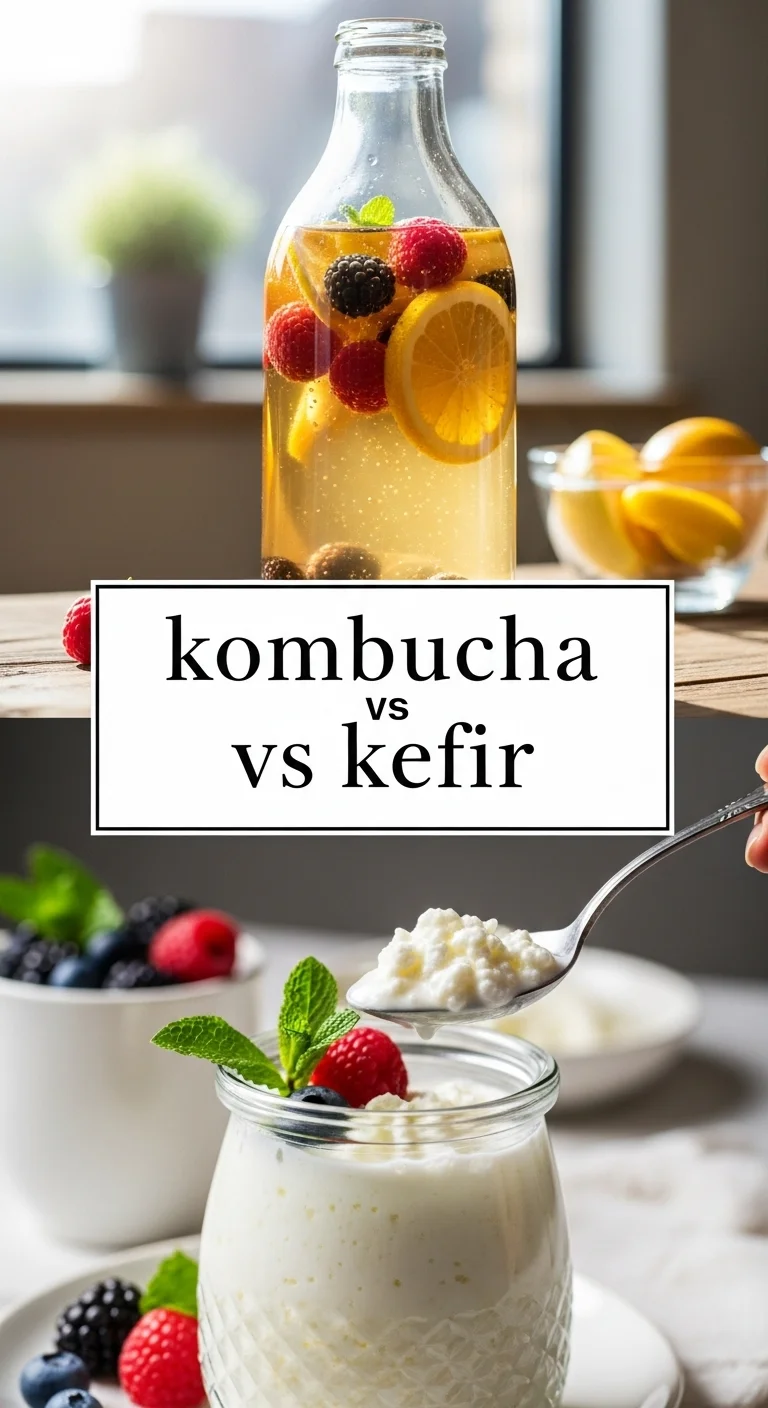

Kombucha vs Kefir: A Guide to Probiotic Beverages
- Total Time: 30 minutes (excluding fermentation time)
- Yield: 4 servings
- Diet: Vegan
Description
Explore the differences between kombucha and kefir, two ancient fermented beverages celebrated for their gut health benefits. Discover their origins, fermentation processes, and nutritional profiles to find your ideal drink.
Ingredients
- Kombucha starter culture (SCOBY)
- Tea (black or green)
- Sugar
- Kefir grains (for kefir)
- Milk (cow, goat, or sheep for milk kefir)
- Sugar water (for water kefir)
Instructions
- To make kombucha: Brew tea and dissolve sugar, chill, add SCOBY, and ferment for 7-30 days.
- For milk kefir: Mix milk with kefir grains and ferment for 12-48 hours.
- For water kefir: Combine sugar water with water kefir grains and ferment for 24-48 hours.
- Strain and enjoy your fermented beverage chilled or at room temperature.
Notes
Feel free to experiment with flavors by adding fruits or herbs during the secondary fermentation of kombucha.
- Prep Time: 15 minutes
- Cook Time: 0 minutes
- Category: Beverages
- Method: Fermentation
- Cuisine: Various
Nutrition
- Serving Size: 1 serving
- Calories: 70
- Sugar: 10g
- Sodium: 10mg
- Fat: 0g
- Saturated Fat: 0g
- Unsaturated Fat: 0g
- Trans Fat: 0g
- Carbohydrates: 15g
- Fiber: 0g
- Protein: 1g
- Cholesterol: 0mg